primary IT: plant growth graph
visitors this year: 151
handling data from experiments / primary school science
by Roger · Published Apr 2019 · Last modified Sep 2024
visitors this year: 151
Primary science IT ideas for topics concerning plants
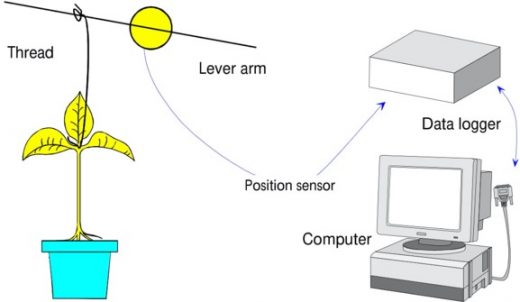
visitors this year: 181 A position sensor can be attached to a plant to record its growth. Depending on the plant chosen this is a very slow process. Using a sensor greatly decreases the...
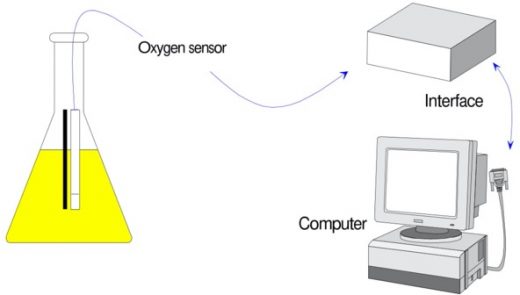
When living things respire they use up oxygen. This can be monitored using an oxygen sensor. The living thing can be a plant, animal or microorganism. Maggots, locusts, or yeast are often used and so can pond-weed. If you use Elodea, its container should be kept in the dark or wrapped in foil.
It is also quite easy to show how temperature affects the rate of respiration
– however, in this example, the oxygen sensor should be able to compensate for its own response to temperature changes.

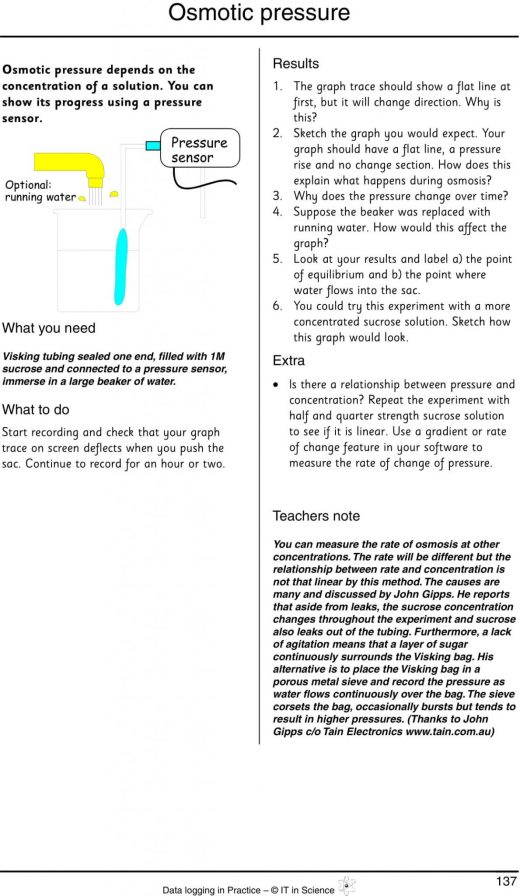

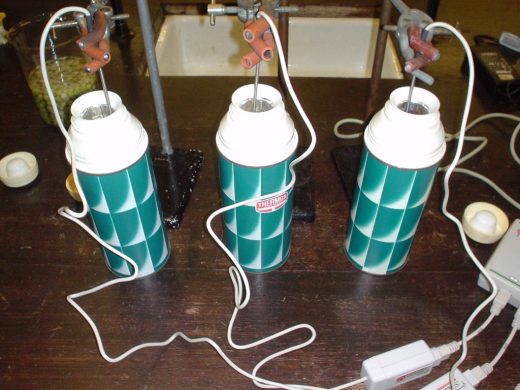
visitors this year: 207 When seeds germinate they use energy and give off heat. To test this, you can use temperature sensors which will continuously monitor any heat produced. You will set up some...

visitors this year: 174 It’s not easy to measure how fast a plant grows. You would probably not be too keen to take measurements every few hours – and especially not overnight. There are...
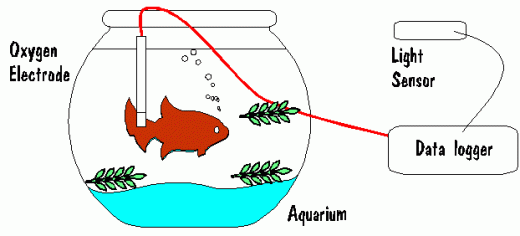
visitors this year: 266 Life in any aquatic habitat has to be supported by oxygen. We are all too familiar with rivers and streams where the oxygen supply has been exhausted and the river...

visitors this year: 149 Is mown grass in the compost heap really dead? When you cut the grass you remove its source of vital materials and the cut leaf ‘dies’. But when you feel...
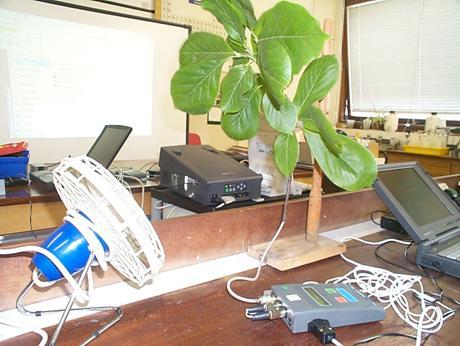
visitors this year: 215 Transpiration and a pressure sensor A sensitive barometric pressure sensor can be used to demonstrate transpiration. The picture here shows a low pressure sensor (as it was called) with a...
visitors this year: 1,323 A Cambridge project seeks to improve farming practices in Africa by sharing advances in biotechnology. They’re called Biosciences for Farming in Africa (www.b4fa.org). Chris Creese meets one of their founders Dr David...

Podcast: Play in new window
more: Spotify | RSS | subscribe options

visitors this year: 938 You may wonder how today’s farmers are able to grow wheat reliably. We talk with plant scientist Gillian Covey, who explains how different strains of wheat can be bred to make...
Podcast: Play in new window
more: Spotify | RSS | subscribe options
visitors this year: 413 A government initiative to help farmers keep the water supply free of pollutants. We visit a farm in Duxford, England where Andrew Down from ‘Natural England’ explains what is meant by...
Podcast: Play in new window
more: Spotify | RSS | subscribe options
visitors this year: 335 Speaking to The Science show’s Chris Creese, the author of “Wild Hope” explains what ecosystems do for us, and how we can help ourselves by helping the environment. Cambridge conservation scientist, Andrew Balmford,...
Podcast: Play in new window
more: Spotify | RSS | subscribe options
visitors this year: 391 With water shortages and hosepipe bans in summer, Nicola talks to plant scientist Dr Helen Holmes about the importance of water and how plants respond to a lack of it....
Podcast: Play in new window
more: Spotify | RSS | subscribe options
visitors this year: 366 As the season switched from spring to summer we look at weedkillers. How do weedkillers (aka herbicides) work? How can a weedkiller target one plant and not another? Roger Frost asked...
Podcast: Play in new window
more: Spotify | RSS | subscribe options
rogerfrost.com is about using technology with a curious mind. We’re interested in home automation, gadget hacks and using sensors to understand what’s going on around the house. You can use keywords and the search box above to find content.
Please enjoy and share this advert free content. To say hi – ‘leave a reply’ button on this page – the message goes only to me in Cambridge, UK.
Roger Frost (his cv) has been writing about technology for all the years since 1988 and this web includes his articles; tutorials, radio interviews and, going back to our early days, lesson ideas for science teachers.
HOME AUTOMATION:


